The quantum industry benchmarks itself.
We think that's a problem.
Quantum benchmarks today are fragmented. Vendors define metrics optimized for their own hardware. Academic benchmark suites provide methodology — but as published papers and code, not persistent infrastructure. Competition platforms host time-bounded challenges. What's missing is a persistent, framework-agnostic place where quantum claims can be tested and retested reproducibly over time. That's what we're building.
Independent evaluation infrastructure
for quantum computing
Kvantiq Studio builds the unglamorous tools the quantum ecosystem needs to mature: framework-agnostic benchmarks, reproducible scoring, and a standardized evaluation methodology.
Our platform provides the infrastructure for hosting reproducible quantum computing challenges. Challenge creators — researchers, institutes, and companies — define the evaluation methodology for their domain. We provide the execution pipeline, reproducibility framework, and persistent scoring infrastructure. Every challenge carries a versioned evaluation specification, grounded in published benchmarking protocols, so results remain verifiable as methods evolve.
We don't provide compute. We don't host quantum hardware. We provide the independent infrastructure where quantum claims can be tested reproducibly — built in Europe, for the global quantum community to trust.
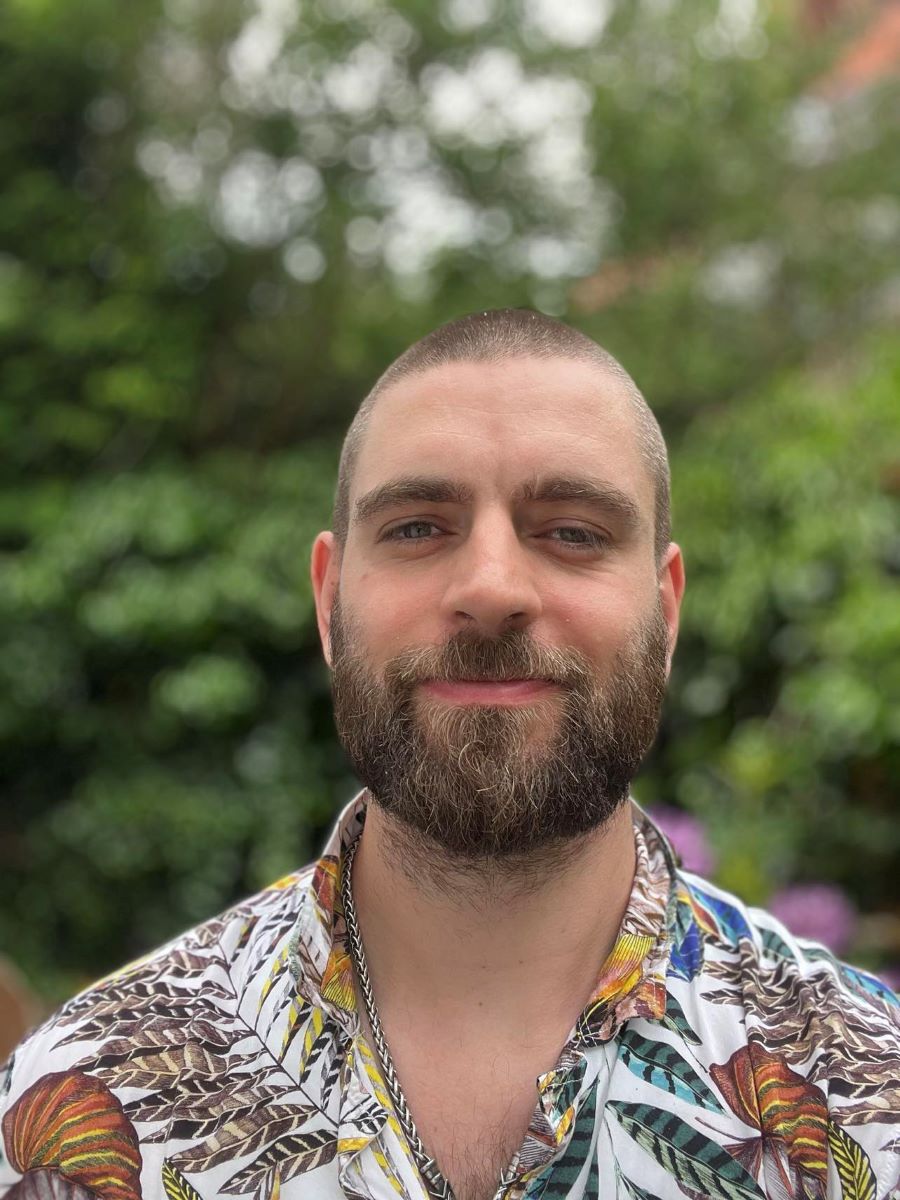
Born in Denmark.
Backed by conviction.
The road here wasn't straight. After finishing a master's in educational science during COVID, the job market had other plans. What followed was a long stretch of unemployment, two kids, paternity leave, and the kind of self-doubt that compounds when nothing moves forward. The turning point came through a UX design programme at Talent Garden — it reconnected old passions for design and technology with new skills, and for the first time in years, the energy was back. That's where the Danish startup community stopped being abstract and became real people in the room.
Rune doesn't come from quantum physics. He comes from educational science and UX design, a TechBBQ internship that ran out of runway, and the pragmatic realization that the best way to stay in the room was to build something the room actually needed.
The idea didn't come from a lab or a business plan. It came from a period with nothing to do — an internship that ended, a desk that stayed, and a decision to make that desk worth keeping by showing up at every quantum and DeepTech meetup in Copenhagen. One of those conversations produced a passing remark about what the quantum ecosystem was missing. Another turned that remark into a dare: that's not a side project, that's a startup.
The application was written for two founders. It shipped with one. The platform is built by a solo founder who doesn't write code — the idea, the design decisions, the evaluation methodology, and every partnership are human. Coding assistants handle the implementation: scaffolding, testing, deployment. The things that used to require a team. The thinking stays with the person.
Born in Denmark.
Backed by conviction.
The road here wasn't straight. After finishing a master's in educational science during COVID, the job market had other plans. What followed was a long stretch of unemployment, two kids, paternity leave, and the kind of self-doubt that compounds when nothing moves forward. The turning point came through a UX design programme at Talent Garden — it reconnected old passions for design and technology with new skills, and for the first time in years, the energy was back. That's where the Danish startup community stopped being abstract and became real people in the room.
Rune doesn't come from quantum physics. He comes from educational science and UX design, a TechBBQ internship that ran out of runway, and the pragmatic realization that the best way to stay in the room was to build something the room actually needed.
The idea didn't come from a lab or a business plan. It came from a period with nothing to do — an internship that ended, a desk that stayed, and a decision to make that desk worth keeping by showing up at every quantum and DeepTech meetup in Copenhagen. One of those conversations produced a passing remark about what the quantum ecosystem was missing. Another turned that remark into a dare: that's not a side project, that's a startup.
The application was written for two founders. It shipped with one. The platform is built by a solo founder who doesn't write code — the idea, the design decisions, the evaluation methodology, and every partnership are human. Coding assistants handle the implementation: scaffolding, testing, deployment. The things that used to require a team. The thinking stays with the person.
Embedded in the European
quantum community
Kvantiq doesn't operate in isolation. We're part of the ecosystem we serve.